

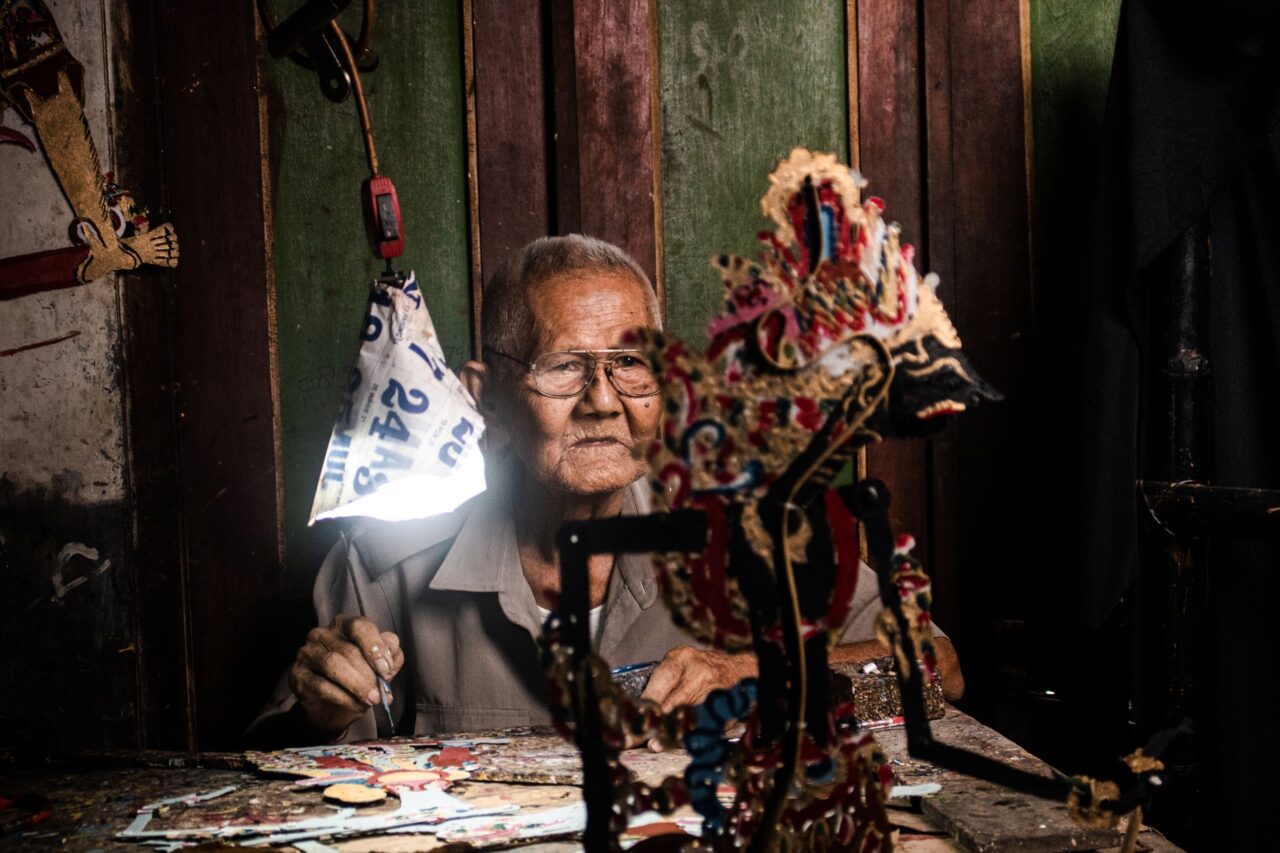
Wayang Kulit Shadow Puppet Performance in Singapore
A centuries-old Malay and Javanese storytelling craft, played out behind a glowing screen, that still gives a modern event something real to talk about.
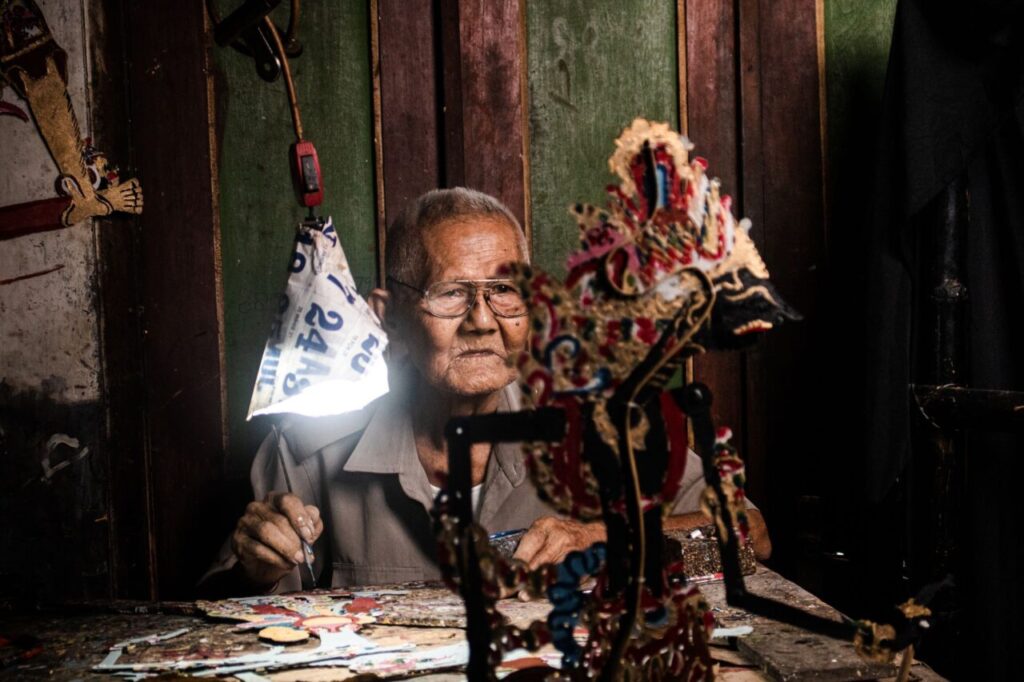
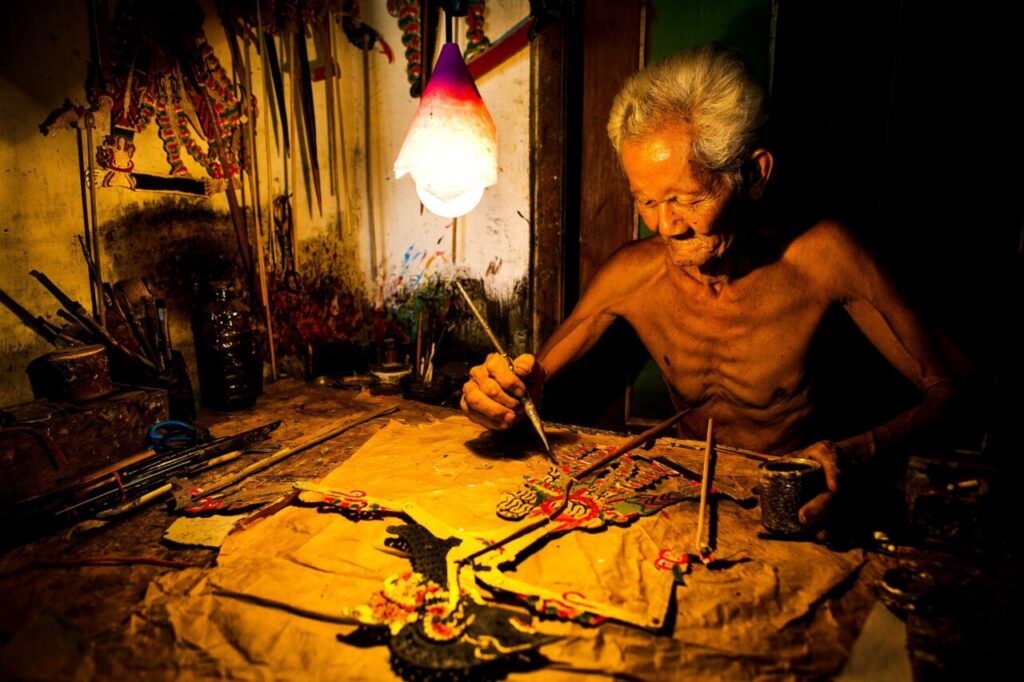
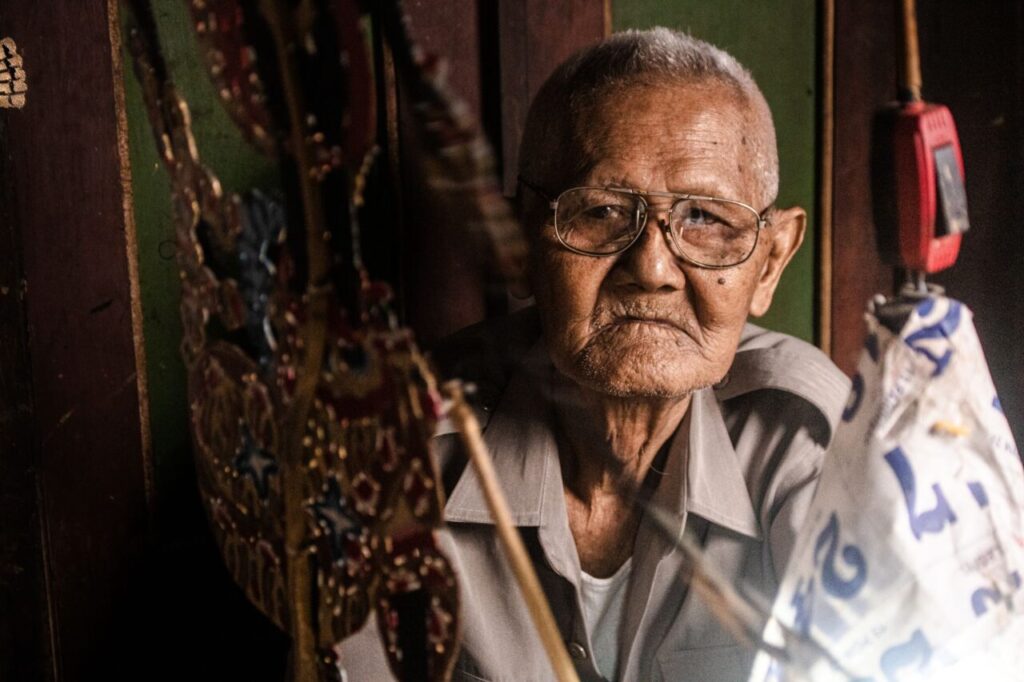
Wayang kulit is a shadow puppet art form where flat leather figures are worked against a lit screen by a single performer known as a dalang, who narrates the tale and voices each character, usually alongside gamelan music. At Singapore events, organisers almost always book a trimmed-down showcase of 15 to 30 minutes rather than the full overnight version used in traditional settings. The act needs a room that can go dark, a screen and lighting rig, access to a power point, and about 2 to 3 metres of clear space behind the screen so the puppeteer has room to work.
How a wayang kulit shadow puppet performance actually works
The term wayang kulit translates loosely as "leather puppet" or "skin puppet". Each figure is flat, cut from treated hide, hand painted, and fixed to rods so that one performer, the dalang, can hold and animate it against a lit cloth screen called a kelir. What the crowd actually sees is the shadow, not the puppet itself, and that gap between object and image is where the visual pull comes from. An oil flame once provided the light; these days an LED or electric bulb does the job and gives a sharper, more consistent silhouette.
The dalang's job stretches well beyond puppet handling. This one performer carries the whole narration, switches voice for every character on screen, signals the musicians, and controls how the story moves. It plays more like a solo theatre act than a puppet show in the usual sense. Traditional material comes from the Ramayana and Mahabharata epics, Malay Panji stories, or regional folk tales, often reworked with jokes and present-day references stitched into the telling.
In its original setting across the region, a wayang kulit show could stretch across several hours of the night with a live gamelan ensemble playing throughout. Hardly anyone requests that version for a Singapore event. What clients actually book is a shorter, event-ready set, and getting that point agreed with your performer early saves confusion later.
2. Length and contentSet formats and running times for wayang kulit
Three shapes cover most event bookings: a brief cultural opener, a longer story-led feature, and a hands-on educational session. The table below breaks down how each one plays out.
| Format | Typical length | What it includes | Best for |
|---|---|---|---|
| Showcase set | 15 to 25 minutes | A trimmed story snippet, live or recorded music, dalang narration in English or Malay | Opening segments, gala moments, product launch tie-ins |
| Feature performance | 30 to 45 minutes | One full short story, a larger puppet cast, an optional Q and A with the dalang afterward | Cultural festivals, heritage evenings, Racial Harmony Day programmes |
| Interactive session | 45 to 60 minutes | A short demo, guests handling puppets themselves, a look behind the screen, a photo opportunity | School programmes, family days, visitor and tourism experiences |
Decide on narration language before confirming anything. Most dalangs active on the Singapore event scene work in English, Malay, or a blend of both, and some can offer Mandarin narration too. Raise this when you first enquire rather than leaving it to the event day.
3. SuitabilityEvents that suit a wayang kulit performance
Wayang kulit earns its place at an event when there is a genuine reason to include it, not simply as filler. It fits particularly well at Malay wedding receptions looking to add cultural weight beyond the standard programme, Racial Harmony Day and multicultural school showcases, corporate functions built around a Southeast Asian or local heritage theme, National Day period celebrations, and hospitality or tourism events introducing guests to local traditions. It also pairs naturally with other heritage acts, so organisers often combine it with a look through our cultural dance Singapore listings or follow it with a higher-energy act such as bhangra dancers and dhol players later in the night.
This is a slower, more reflective act than a dance routine. If your event runs loud and fast with music as a backdrop, wayang kulit will need its own scheduled moment with full attention on it, rather than a side booth people wander past. That mismatch, expecting it to work as ambient entertainment when the format needs people to stop and watch, is the most common issue we see at enquiry stage. If roaming or background entertainment is what you actually want, browse our act type directory instead.
4. Technical setupSpace, power and technical needs
Setting up is far simpler than a full stage production, but a few elements cannot be skipped. You will need a frame and screen, a controlled light behind it, enough depth for the puppeteer and the puppet rack, and a room dim enough for the shadow to show clearly to the back row and on camera.
| Requirement | Typical need | Why it matters |
|---|---|---|
| Screen footprint | Around 2m to 3m wide, confirm with the performer | Sets the limit on how many puppets appear on screen together |
| Depth behind screen | 2m to 3m of clear space | Gives the dalang room to move and reach the puppet rack |
| Power | At least one dedicated point near the screen | Runs the light source and the sound system where used |
| Lighting | Room lighting that can be dimmed or switched off | Bright ambient light flattens out the shadow effect |
| Sound | House PA system or a small standalone speaker | Keeps narration and music audible over room noise |
Raise the lighting question with your venue well before the event. A ballroom full of unblockable windows or a daytime outdoor stage is the usual reason a wayang kulit booking needs to be reworked after it has already been planned.
The costliest mistake to avoid
Locking in wayang kulit for a bright, open-air daytime slot without first checking whether the light can be controlled. The whole shadow effect relies on contrast between the screen and the surrounding room. If the venue cannot be darkened, or the slot falls in full daylight outdoors, the visual simply will not register, and no amount of rehearsal changes that on the day itself. Check lighting and timing with your performer before the run of show is finalised, not once it is already set.
Wayang kulit indoors or outdoors
An indoor, dim or evening setting suits this act best and takes the least extra work to arrange. Outdoor shows can still happen, but only once it is dark or inside a shaded, enclosed tent with blackout sides, and you will likely need a generator or a confirmed power source if there is no fixed outlet close by. A daytime outdoor booking is worth rethinking altogether, or swapping for a static puppet display with a dalang on hand to talk guests through the craft instead of running a full shadow show. Tell your agency the exact time slot and whether the setting is indoor or outdoor as early as possible, since it changes what gear gets quoted.
6. ProcessBooking a wayang kulit performance step by step
Once you get in touch, the process generally follows four steps.
- Share the event details. Date, venue, indoor or outdoor, time slot, guest numbers, and whether this is a standalone moment or part of a broader cultural line-up.
- Settle on format and length. Showcase, feature, or interactive session, along with narration language and whether music should be live or recorded.
- Check the site and technical setup. We review screen space, power access, and lighting against what your venue can actually provide, and flag anything that needs adjusting.
- Receive a quote, confirm, and get a run sheet. You get a written quote, a load-in and setup window, and a fixed slot in your programme.
How far ahead you need to book depends on the calendar. Festival season, the Malay wedding peak, and the National Day period fill up well ahead, so enquiring early gives you a wider choice of performer and a better shot at your preferred date.
7. Cost factorsWhat drives the price of a wayang kulit booking
There is no single flat rate, since the format itself changes the cost. Price is shaped by how long the set runs, whether music comes from a live gamelan or small ensemble or is pre-recorded, whether an interactive segment with extra staffing is included, how much work your venue's screen and lighting setup requires, and travel or load-in time if access is difficult. A simple 20-minute showcase with recorded music and a solo dalang is the lightest job to deliver. A full-length feature with live accompaniment and an interactive add-on is a far bigger production and is priced to match. Ask for a quote built around your specific brief rather than a generic range, since the difference between a basic and a full setup is substantial.
Common questions
What exactly is wayang kulit?
Wayang kulit is a shadow puppet tradition from the Malay and Javanese world. A performer called a dalang moves flat leather puppets against a lit screen, narrates the story, and voices each character in turn. Guests watch the shadows thrown on the screen rather than the puppets themselves, usually set to gamelan music.
How long does a typical booking run for?
In its traditional setting the show can last several hours through the night. For Singapore events, bookings usually take the form of a 15 to 25 minute showcase, a 30 to 45 minute feature performance, or an interactive session lasting up to an hour. Agree the exact length with your performer before booking, as it changes the quote.
Does this act work for corporate functions?
Yes. It suits corporate events with a Southeast Asian or local heritage angle, diversity and inclusion programmes, and client hospitality evenings that want a genuine cultural element rather than generic entertainment. It performs best as a dedicated, seated segment rather than roaming entertainment at a mingling reception.
How much room is needed for the setup?
Plan for a screen roughly 2 to 3 metres across, plus 2 to 3 metres of clear depth behind it for the puppeteer and puppet rack. A power point near the screen is needed for lighting and sound. Measurements vary between performers, so confirm the exact footprint when booking.
Can the show be staged outside?
Yes, though only after dark or within a shaded, enclosed structure fitted with blackout sides, since the shadow effect needs strong contrast between the lit screen and the darkness around it. A bright daytime outdoor slot will not produce a visible effect. Check timing and lighting with your performer before the booking is locked in.
Which stories get told during a performance?
Classic repertoire draws on the Ramayana and Mahabharata epics, Malay Panji tales, and local folklore. For event bookings, dalangs typically compress a single story arc to fit the shorter running time, and some can adjust the narration content to match your event's theme on request.
Can the dalang narrate in English?
Many dalangs performing on the Singapore event circuit narrate in English, in Malay, or switch between the two depending on who is in the room. Confirm language preferences when you first enquire, since not every performer covers the same range.
How early should this be booked?
There is no strict cutoff, but demand climbs during the Malay wedding season, cultural festival periods, and around National Day, so book as early as possible within those windows. Outside peak season, a few weeks' notice is usually enough for a standard corporate or school event, though earlier enquiry still gives you more choice of date and performer.
Bring a wayang kulit performance into your event
Share your date, venue and preferred format and we will match a performer and build a quote around your brief.
Get a Free Quote